We are very happy to share our latest work on how HNF1A’s involvement in GLI3 processing affects pancreatic and intestinal development, using a combination of in vivo work (multiple conditional mouse models) and human iPSC models is now ONLINE ahead of print in Genes and Development.
By combining several complex transgenic systems, global and single-cell transcriptomics, pathway analysis, cell biology and physiology, we show for the first time that HNF1A and Hh-signaling are involved at posterior foregut stage in a regulatory loop necessary for elevating HNF1A expression.
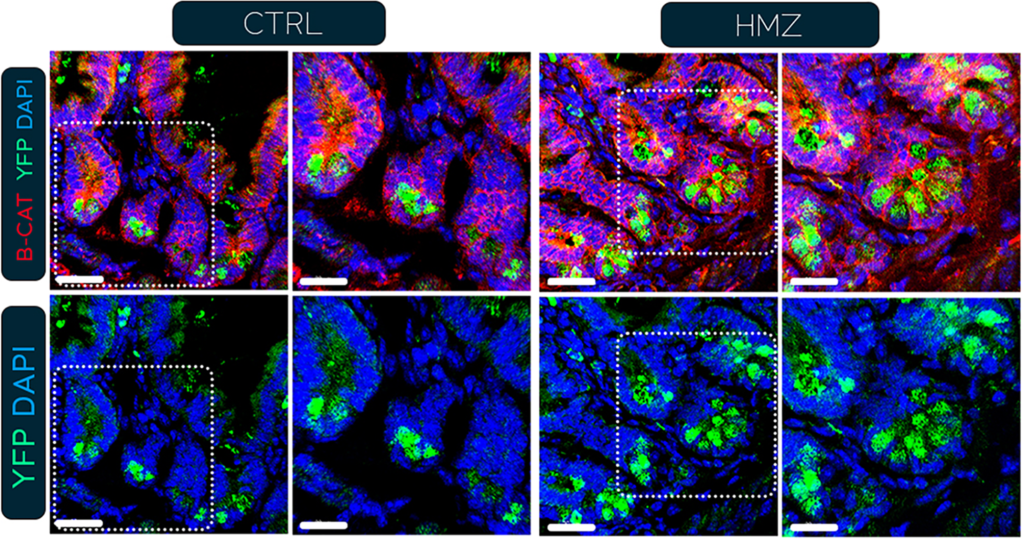
By using 2 CRISPR HNF1Ap291fsinsC clones and one HNF1A-MODY patient-derived hiPSC line, we show that the HNF1AP291fsinC mutation impedes this circuit, leading to disrupted GLI3 processing by cilia proteins, therefore abolishing the normal HNF1A upregulation in response to Hh-signaling inhibition. In the absence of HNF1A upregulation, HHEX, a key selector gene required for acquiring the pancreatic progenitor fate at the expense of intestine and liver, fails also to increase its expression. Consequently, CDX2, essential for adopting the intestinal lineage but also for glucagon expression, maintains its levels, leading to a diversification of cell fate programs in the HNF1AP291fsinC. The persistent reinforcement of the differentiation program combined with cellular robustness partially rescues the islet cell fate, yet displaying a significant tilt towards glucagon-producing cell identity. This outcome is also evident in vivo, in mice, with the endocrine-restricted Hnf1a mutation leading to increased alpha cell population in the islet and significant elongation of the small intestine. The intestine elongation is mediated by the glucagon/GLP expressing cells, as the Hnf1a mutation specific in these cells replicating the phenotype and significantly increasing their numbers. Structural changes accompanied the intestinal elongation, with enlarged villi area and modified crypt architecture presenting increased number of YFP+ and Hnf1a+/-cells and decreased Gli3+ cells.
Continue your reading here:
Authors:
Genes and Development 2026 (in press) 2026 Mar 26. Online ahead of print.
DOI information: doi: 10.1101/gad.353153.125