I recently was invited by the organizers to give a talk on our work at the next Tuesday Seminar on 21st of September hosted by the Center for Molecular Medicine Norway. For more details, please click here.
I recently was invited by the organizers to give a talk on our work at the next Tuesday Seminar on 21st of September hosted by the Center for Molecular Medicine Norway. For more details, please click here.

We are looking for 2 new members to join our increasing research group! Two full-time PhD positions are available for a period of four (4) years. The focus of our research is to seek novel insights into the cellular and…
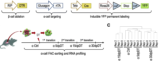
A detailed study into alpha-cells transcriptional changes upon massive ablation of beta-cells carried out in collaboration with Dr. Santiago Rodríguez-Seguí and Prof. Pedro Herrera groups was published today, and we show that: α-cells undergo stage-specific transcriptional changes 5- and 15-days…
I recently was invited by the organizers to give a talk on our work at the next Colloques du Jeudi 2021, 26 May hosted by the Département de Médecine, Service d’Endocrinologie, Diabétologie, Nutrition et Education Thérapeutique du Patient, Hôpital Cantonal…
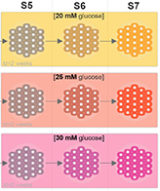
Our latest work on iPSC-derived human pancreatic progenitors differentiation is now out for Early View: The main goal of this study was to assess the effects of elevated glucose concentrations exposure during the last stages of guided in vitro differentiation…
We are very happy and grateful to the Novo Nordic Foundation @novonordiskfond that will continue to support our research for the next 5 years! We are delighted to continue our work on the role of somatostatin-producing delta-cells in monogenic diabetes.…
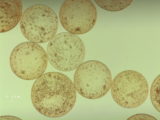
Pancreatic islet endocrine cells generated from patient-derived induced pluripotent stem cells represent a great strategy for both disease modeling and regenerative medicine. Nevertheless, these cells inherently miss the effects of the intricate network of systemic signals characterizing the living organisms.…

We are very happy and grateful to the Diabetesforbundet forskningsfond @diabetes_no for financing our research! Congratulation, Thomas, for your first grant award! Our research group received funding from Diabetesforbundet forskningsfond the for 2 projects: The effect of human level chemical…
I recently was invited by the organizers to give a talk on our work at the next Diabetesforum 2021, 27-29 April. Details about pricing and registration are available here (in Norwegian): https://www.diabetes.no/for-helsepersonell/konferanser/diabetesforum2021/priser/. All talks will be in English, but all…
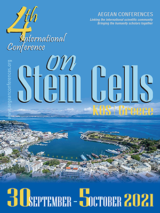
I recently was invited by the organizers to give a talk on our stem cell work at the next scientific retreat, officially known as the 4th International Aegean Stem Cell Conference. More details here: https://www.aegeanconferences.org/src/App/conferences/view/152 The deadline for registration is…
We are very happy and grateful to learn that the Norwegian Research Council @forskningsradet will continue to support our research for the next 5 years! Many plans and experiments are now possible and we are delighted to continue our work…
Congratulations to Andreas Mathisen, our PhD student, for obtaining one year mobility fellowship from Faculty of Medicine, University of Bergen, to study and work at University of Geneva, Switzerland! We are proud of you!