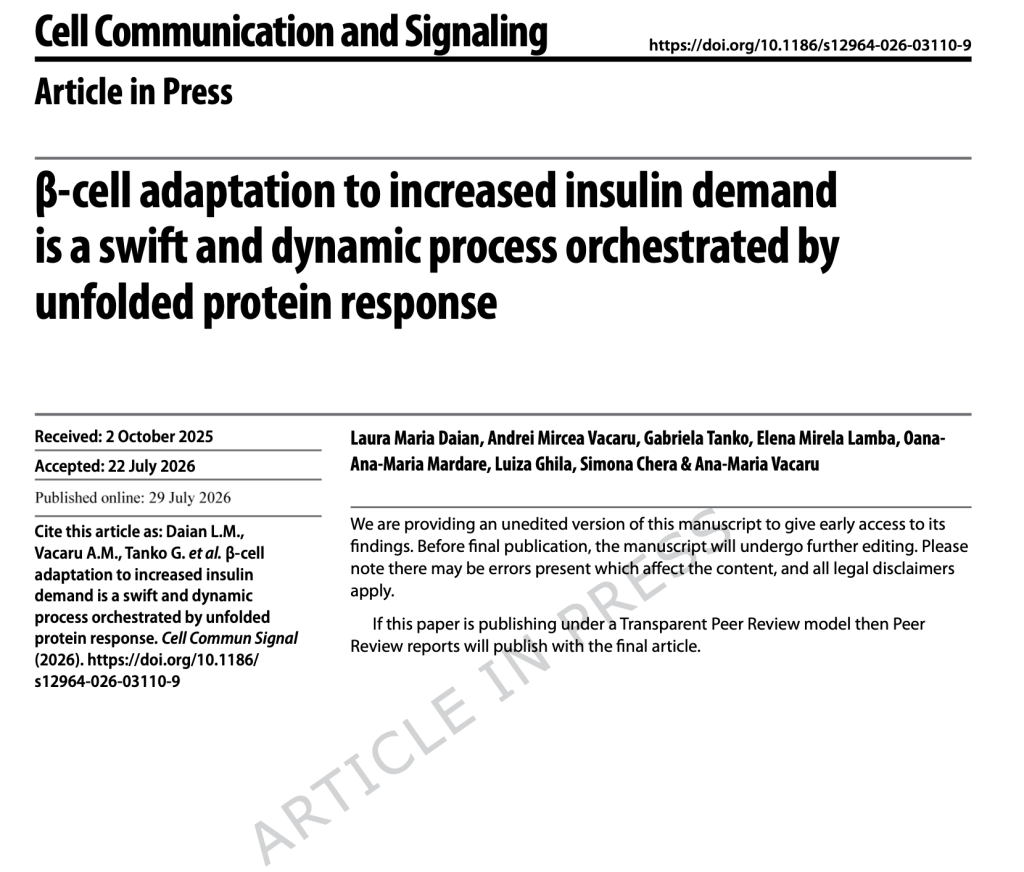
Many congratulations to the team led by our collaborator, Ana Vacaru, on this work accepted for publication in Cell Communication and Signaling
Laura and Ana, together with the other team members studied the pancreatic β-cell adaptation to high insulin demand. They took advantage of the RIPDTR 50% ablation model. This model, due to the transgene location on X-chromosome, can induce 50% β-cell death be obtained by injecting diphtheria toxic due to the random X inactivation (where one of the two X chromosomes in female mammalian cells is permanently silenced). This model allows for a controlled and timed increase of the secretory workload on the remaining cells while maintaining normal blood glucose levels. By combining bulk islet transcriptomics with physiological, ultrastructural, and imaging analyses, the team mapped the dynamic molecular and functional adaptations that occur during this compensatory phase.
The initial transcriptional profile was characterized by the induction of stress and apoptosis genes, which later shifted to the activation of adaptive UPR pathways and enhanced insulin processing. Nuclear ATF4 and Xbp1 levels rose transiently, indicating that multiple UPR branches deploy through distinct mechanisms to restore homeostasis. Functionally, partially ablated islets showed superior secretory competence during an acute secondary ER stress challenge, though this adaptive advantage disappeared under prolonged stress. Together, these findings define a temporary, adaptive UPR program that maintains beta-cell function immediately following beta-cell loss, offering insights into mechanisms that could be leveraged to boost beta-cell resilience in diabetes.
Continue your reading here:
Authors: Laura Maria Daian, Andrei Mircea Vacaru, Gabriela Tanko, Elena Mirela Lamba, Oana-Ana-Maria Mardare, Luiza Ghila, Simona Chera, Ana-Maria Vacaru
Cell Communication and Signaling, early online 29 July 2026
DOI information:10.1186/s12964-026-03110-9